
Living soil
Feed the soil, and the garden follows
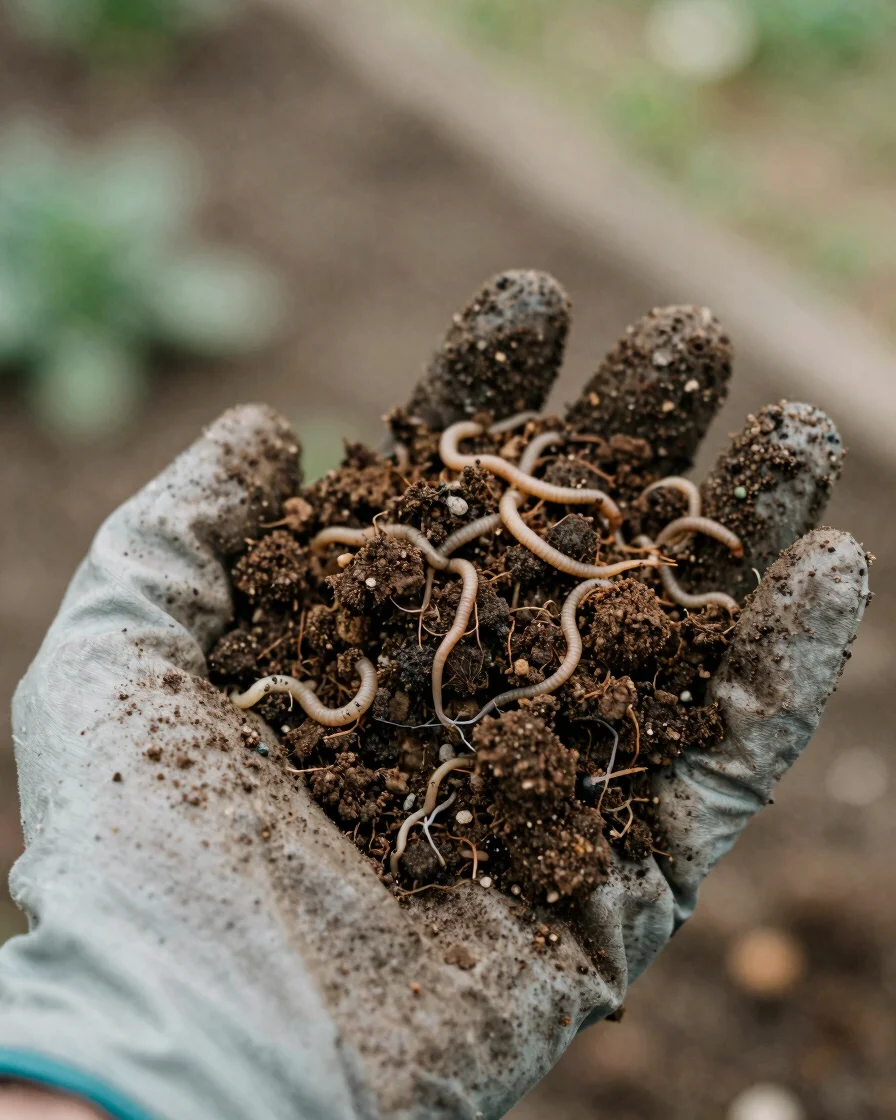
Fertility starts below the surface. Surface mulch, steady organic matter, and carefully built compost keep soil life active and reduce the need for synthetic inputs.
Practical methods
Mulch, cover, and compost in balance
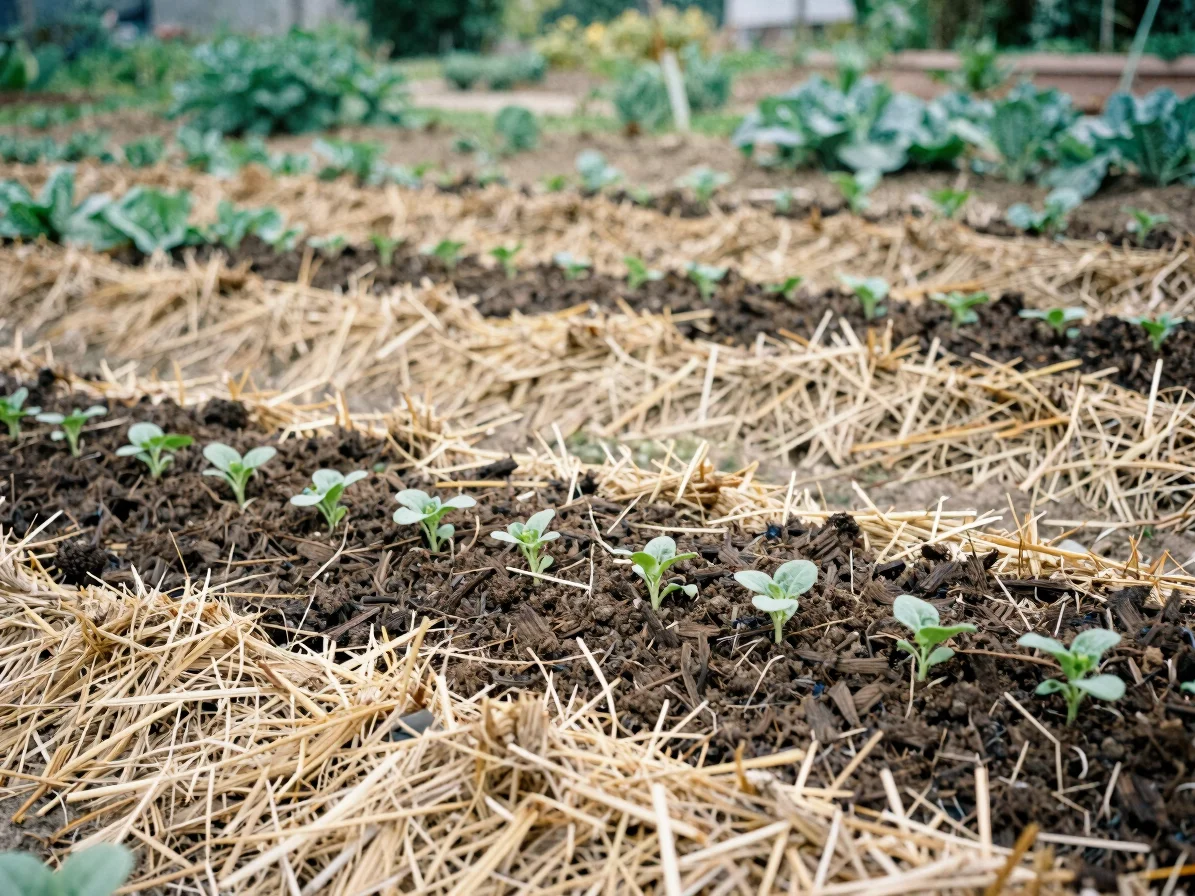
Carbon-rich mulches such as straw, leaves, and wood chips protect the surface and keep moisture in place. Cover crops add roots and organic matter between harvests.
Build balanced piles by alternating green plant waste with dry carbon layers, and let the pile rest once it is crumbly and sweet-smelling.
Soil biology
Fungi, bacteria, and undisturbed networks
A healthy soil carries a balance of fungal and bacterial activity. Fungal networks build structure and move water and nutrients, and they are easily damaged by repeated tillage.
Zero-till and no-dig approaches leave the underground network intact. Mulch shields the surface from ultraviolet light, retains moisture, and feeds the organisms that turn organic matter into humus over time.
Layered hot and cold composting turns local plant waste into balanced humus, giving the soil a steady supply of biology rather than a quick fix.