
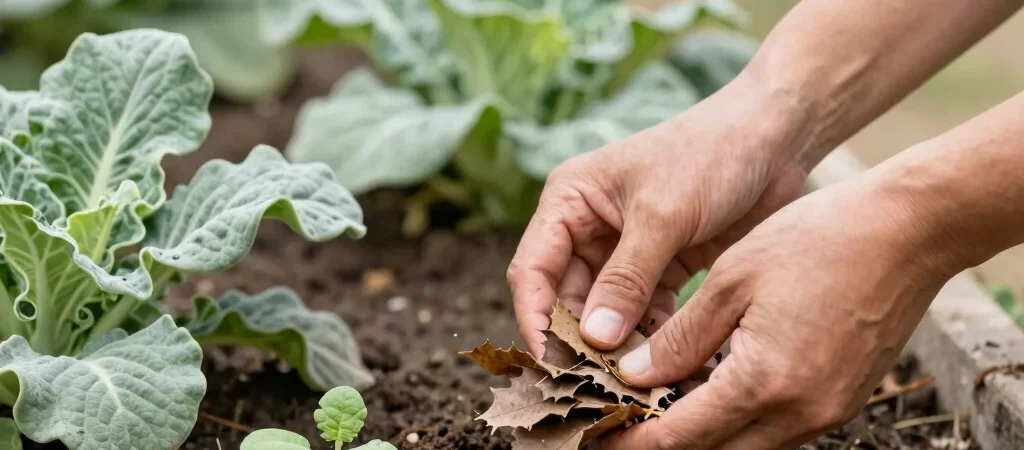
A garden bed can look tired and still not need a bag of fertilizer. Before adding anything, look at the soil after rain and again as it dries: does water soak in, run off, or leave a hard crust? Those small observations help you choose between compost, mulch, or simply giving the soil a quieter season.
Notice the surface first
If the surface is exposed and dries quickly, a protective layer of organic matter may be more useful than digging in a new amendment. Mature compost can help replenish a vegetable bed, while shredded leaves or clean straw can shield the soil between plants. Check what is already there, though: a thick, damp layer against plant stems can invite rot.
Choose mulch for the bed
For annual vegetables, a light layer of compost or finely shredded leaves is easy to work around when it is time to sow. Coarser wood chips are often better on paths or around established shrubs than mixed into a vegetable bed, where they can make planting awkward. Keep mulch a little clear of stems and crowns, and leave a narrow strip open wherever seeds need contact with warm soil.
Add only what the soil needs
Compost is useful organic matter, but more is not automatically better; a modest surface dressing is often enough for a bed that is already productive. If plants are struggling, check drainage, light, and watering before assuming the soil needs feeding. The practical habit is simple: observe, make one measured change, then watch how the bed responds.