
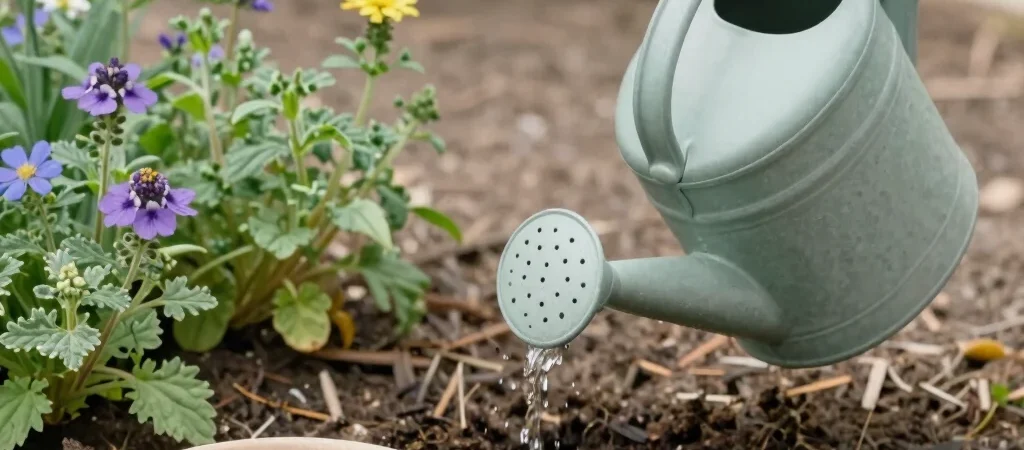
On a dry afternoon, water poured onto a hard garden bed can race toward the path before the roots get much of it. The answer is not always a longer watering session. First, notice where the water goes, then make it easier for the soil to take it in.
Give water time to soak
Watering slowly at the base of plants gives moisture a better chance to reach the root zone than a quick spray over the leaves. If water begins to run off, pause and let it soak in before watering again. A shallow basin around a newly planted tree or shrub can also keep water near the roots, as long as it does not leave the plant sitting in permanently saturated soil.
Protect the soil surface
Bare soil can lose moisture quickly, especially in a sunny vegetable bed. Once seedlings are established, a suitable mulch helps shade the surface and reduce evaporation; keep it away from plant stems and leave room for new seeds to emerge. Organic matter added thoughtfully over time can also improve the soil's structure, helping it absorb and hold water.
Make space for useful wildlife
Water care can support wildlife without turning the garden into a project. A shallow dish with stones gives visiting insects a place to land, while flowering plants suited to your region offer food through more of the season. Refresh standing water regularly, and keep the dish shallow; observe which visitors arrive before deciding what else the garden needs.