
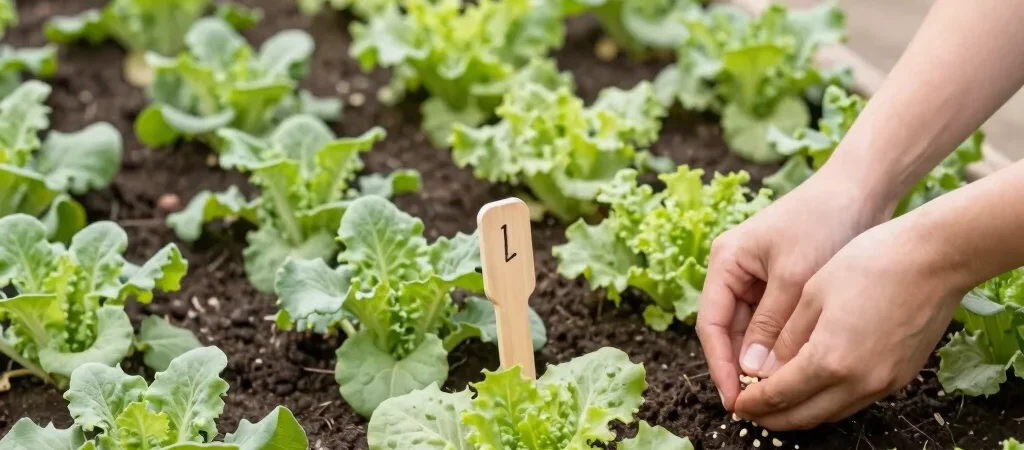
The seed packet is open, the bed is ready, and it is tempting to sow the whole row at once. But a kitchen rarely needs a single enormous flush of lettuce or radishes. A few short rows, repeated as conditions allow, can turn one busy planting day into a steadier harvest.
Let local conditions lead
A calendar gives you a starting point, not a guarantee. Compare the crop's preferred conditions with your local frost dates, the soil temperature, and the weather ahead; cool-season greens and warm-season beans do not want the same start. Seed packets offer useful spacing and sowing guidance, but the bed itself tells you whether soil is workable or still cold and wet.
Make small repeat sowings
Instead of filling a long row in one go, sow a short section and reserve space for another planting later. This works well for quick crops such as radishes and salad greens, though the interval should suit the crop and your growing season. Mark each sowing with its date so you can see what emerged, what was eaten, and when the next patch might be useful.
Leave room for the next crop
When a crop is finished, clear only what is spent and make space for the next seasonal planting. A bed that changes through the year can use its space well without demanding a complicated plan. Start with one repeat-sown crop this season; a small, well-timed row is easier to tend than a crowded harvest you cannot use.